


‘Progress in science depends on new echniques, new discoveries and new ideas order. ‘
Inside the Campus
We are Pioneers
Lorem ipsum dolor sit amet, consectetur adipiscing elit, sed do eiusmod tempor incididunt ut labore.
more
We are Pioneers
Lorem ipsum dolor sit amet, consectetur adipiscing elit, sed do eiusmod tempor incididunt ut labore.
more
We are Pioneers
Lorem ipsum dolor sit amet, consectetur adipiscing elit, sed do eiusmod tempor incididunt ut labore.
more
transforming
discovery
The Helmholtz Pioneer Campus
HPC is an innovation campus with a startup culture, routed in the Helmholtz Zentrum Munich and part of the Helmholtz Association, Germany’s largest research community. HPC stands for the smart fusion of biomedical sciences, engineering and digitization in a research environment that has no parallel in Europe.
Helmholtz Pioneers pave the way for tomorrow’s biomedical breakthroughs. Teams of top scientific talents from all over the world work together on the development of novel solutions that make a difference in the prevention, diagnosis and treatment of metabolic diseases. HPC gets its name from Hermann von Helmholtz (1821- 1894), a physician and physicist, polymath and science pioneer. HPC aspires to the research excellence Helmholtz embodies.

Vision
The Helmholtz Pioneer Campus accentuates the technology-, basic discovery- and translational ambitions at the Helmholtz Zentrum Munich by empowering exceptional talents from different disciplines to transform their best ideas into novel solutions that impact early diagnosis, personalized prevention and individual treatment of metabolism-driven diseases.
Mission Statement
The Helmholtz Pioneer Campus enables breakthrough
discoveries through innovative, interdisciplinary research.

Progress in science depends on new techniques, new discoveries and new ideas, probably in that order.

Progress in science depends on new techniques, new discoveries and new ideas, probably in that order.
Pushing the boundaries
of research
Teamleader
Lorem ipsum dolor sit amet, consectetur adipiscing elit, sed do eiusmod tempor incididunt ut labore et dolore.

Matthias Meier
The team bioengineering & microfluidics employs and further advances the microfluidic large-scale integration chip technology to characterize biomolecules as well as their functional interactions within the cellular or whole organism context.
Matthias Meier
The team bioengineering & microfluidics employs and further advances the microfluidic large-scale integration chip technology to characterize biomolecules as well as their functional interactions within the cellular or whole organism context.
Matthias Meier
The team bioengineering & microfluidics employs and further advances the microfluidic large-scale integration chip technology to characterize biomolecules as well as their functional interactions within the cellular or whole organism context.
Matthias Meier
The team bioengineering & microfluidics employs and further advances the microfluidic large-scale integration chip technology to characterize biomolecules as well as their functional interactions within the cellular or whole organism context.
Matthias Meier
The team bioengineering & microfluidics employs and further advances the microfluidic large-scale integration chip technology to characterize biomolecules as well as their functional interactions within the cellular or whole organism context.
Matthias Meier
The team bioengineering & microfluidics employs and further advances the microfluidic large-scale integration chip technology to characterize biomolecules as well as their functional interactions within the cellular or whole organism context.
Publications

Targeted estrogen delivery reverses the metabolic syndrome
Finan B, Yang B, Ottaway N, Stemmer K, Müller TD, Yi CX, Habegger KM, Schriever SC, Garcia-Caceres C, Kabra DG, Hembree J, Holland J, Raver C, Seeley RJ, Hans W, Irmler M, Beckers J, Hrabe de Angelis M, Tiano JP, Mauvais-Jarvis F, Perez-Tilve D, Pfluger PT, Zhang L, Gelfanov V, DiMarchi RD, Tschöp M. „Targeted estrogen delivery reverses the metabolic syndrome.“Nat Med 2012 Nov 11 doi:10.1038/nm.3009.
More Details
Headline for an special Melanocortin signaling in the CNS directly regulates circulating cholesterol
Perez-Tilve D, Hofmann S, Basford J, Pfluger PT, Patterson PT, Grant E, Perez-Wilson H, Granholm N, Arnold M, Trevaskis JL, Butler AA, Davidson WS, Woods SC, Benoit SC, Sleeman MW, DiMarchi RD, Hui DY, Tschöp M. „The CNS melanocortin system directly controls circulating cholesterol.“ Nat Neurosci 2010;13(7):877-82.
More Details HPC Publications
We design new molecular probes, biosensors, synthetically engineered circuits, imaging- and optical devices that promise an unprecedented level of insights into physiological systems. Next-generation microfluidic devices as well as integrated ‘organ on chip’ technologies facilitate for the first time bona fide reconstruction, detailed quantification and experimental modulation of near in-vivo biological systems both in the healthy and diseased states.


This is a headline
HPC employs modern engineering principles and aims to develop new techniques and tools for first time application in biological systems. The design of new molecular probes, biosensors, synthetically engineered circuits, imaging- and optical devices promise an unprecedented level of insights into physiological systems. Microfluidic devices and the emerging ‘organ on chip’ technology for instance, facilitate for the first time the bona fide reconstruction, detailed quantification and experimental modulation of close to in-vivo biological systems in health and diseases.
This is a headline
HPC employs modern engineering principles and aims to develop new techniques and tools for first time application in biological systems. The design of new molecular probes, biosensors, synthetically engineered circuits, imaging- and optical devices promise an unprecedented level of insights into physiological systems. Microfluidic devices and the emerging.
- Information on the browser type and the version in use
- The user's operating system
- The user's internet service provider

HPC employs modern engineering principles and aims to develop new techniques and tools for first time application in biological systems. The design of new molecular probes, biosensors, synthetically engineered circuits, imaging- and optical devices promise an unprecedented level of insights into physiological systems. Microfluidic devices and the emerging.

Research
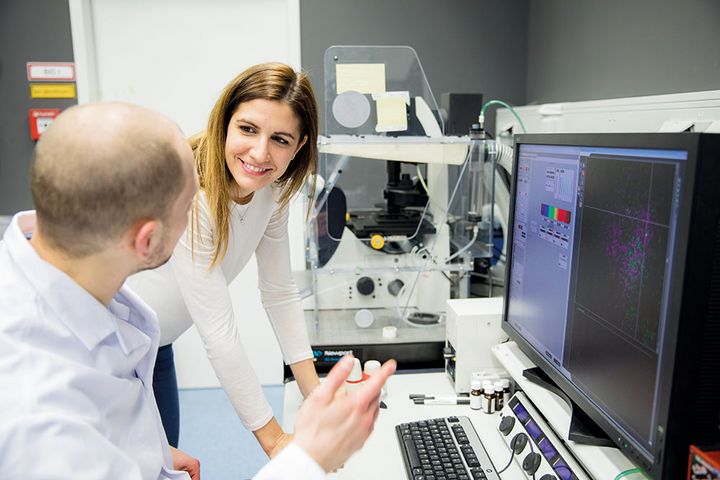
The mammalian cortex is the most complex region of the brain responsible for higher cognitive functions. Abnormal cortical development often translates into prominent neuropsychiatric diseases, which affect different neuronal subtypes with unique molecular and morphological features. There is increasing evidence that epigenetic regulation of key neural genes is essential for subtype specification and that spatial gene positioning and 3D chromatin folding is crucial for cell fate choices in development, evolution and disease. Therefore, a fundamental question in the field is: how is epigenetic identity related to cell fate and what are the functional implication of chromatin remodeling to the temporal and spatial heterogeneity in the cortex? The Bonev Lab focuses on decoding the epigenetic mechanisms of gene regulation in the cortex and how they control temporal and spatial cellular identity in development and evolution. In order to accomplish this, we pursue the following major directions of research.
Projects

Define epigenetic and transcriptional heterogeneity in the cortex at the single cell level
To understand how the cortex is built, we need to be able to study how cellular identity evolves in time, ideally at the single cell level. Importantly, chromatin accessibility and 3D genome organization carry unique information that is not provided by single-cell RNAseq and epigenome changes may precede gene expression. Recent breakthroughs in methodology have allowed chromatin structure to be interrogated even at the single-cell level. Therefore, we are in an ideal and timely position to address the spatio-temporal dynamics of gene regulation and 3D nuclear organization in the cortex.
We are developing a highly innovative genomics approach to simultaneously interrogate gene expression and chromatin topology at single-cell level. In addition, we use a combination of single-cell lineage tracing using CRISPR, scATAC-seq and spatial transcriptomics to understand how lineage potential is encoded spatially and temporally in neural stem cells.

Determine how transcription factors and ncRNAs remodel the 3D genome
We have previously discovered that regulating 3D chromatin architecture and enhancer-promoter interactions plays an important role in the control of gene expression and cell fate in the cortex. Furthermore, several key transcription factors and potentially some long non-coding RNAs are associated at the molecular level with dynamic chromatin loops and may function mechanistically by remodeling genome topology.
However, a key unresolved question in the field is if TF binding and/or lncRNAs can physically affect nuclear 3D architecture or simply exploit it in order to spread and bind on chromatin. To disentangle cause and consequence, we are using transgenic mouse lines and CRISPR-Cas9 genome engineering to determine if TF binding is sufficient to induce an ectopic chromatin looping and rewire 3D genome architecture in vivo.

Dissect the changes in 3D genome topology during brain evolution
Cortical evolution in mammals is considered to be a key advance that enabled higher cognitive function such as language. Structural variations including indels, inversions and duplications account for 3-4 times more sequence divergence between the chimpanzee and the human genomes than single-base-pair mutations. Yet, almost all of the comparative evolution studies trying to understand what makes the human brain unique focus on SNPs in coding genes or putative enhancer regions based on proximity to important neural genes. Recent advances in chromatin biology and our own work suggest that changes in 3D architecture can strongly affect gene expression of regions in close physical proximity and not necessarily on the linear 1D genome.
Therefore, we are systematically examining how 3D chromatin organization has changed during primate evolution focusing on the cortex. We use cerebral organoids from mouse, macaque, chimp and human iPSC and compare them with in vivo models of corticogenesis such as the ferret and the human fetal cortex. We will also examine the functional importance of the most promising structural variations using organoids and in mice using the CRISPR-Cas9 system.
These experiments will establish a new paradigm for rewiring of regulatory interactions during evolution based on local chromatin topology and identify new mechanisms, which may have contributed to the expansion of the cortex in the primate lineage. The use of the organoid system also allows us to test the effect of disease related mutations in associated with chromatin remodeling proteins on 3D chromatin architecture and cell fate using genetically modified human iPSCs.
Matthias Tschöp is the first German physician to receive the Alexander von Humboldt Professorship, the highest-endowed German research award (2012). He is Research Director of the Helmholtz Diabetes Center and Director of the Institute for Diabetes and Obesity. He holds the Chair of the Division of Metabolic Diseases at Technische Universität München. He is Adjunct Professor at Yale University. Furthermore, he is Founding Editor-in-Chief of the journal Molecular Metabolism.
Prof. Tschöp received his M.D. from Ludwig-Maximilians-Universität in Munich. In 1999 he accepted an invitation for a postdoctoral fellowship at the Eli Lilly Research Laboratories in the U.S. After establishing his independent research laboratory at the German Institute of Human Nutrition Potsdam-Rehbrücke in Germany in 2002 and 2003, he returned to Cincinnati where he led a research institute as a tenured Professor of Endocrinology and Diabetes at the University of Cincinnati Metabolic Diseases Institute. Until 2009, Prof. Tschöp was named the Arthur Russell Morgan Endowed Chair of Medicine and Research Director of the University of Cincinnati’s Metabolism Center of Excellence for Diabetes and Obesity.
Factsheet
Academic service
Matthias Tschöp has organized numerous academic conferences, including Keystone Symposia, EMBL Symposia, such as, currently, the EMBO/EMBL Symposium "Translating Diabetes." In 2013 he started the Annual Helmholtz-Nature Medicine Diabetes Conference. The 2nd Annual Helmholtz-Nature Medicine Diabetes Conference will take place in September 2014. He currently directs several research networks including the Helmholtz Alliance ICEMED.
Sought after as an international lecturer and active reviewer and referee for scientific journals such as Nature, Science and Cell Dr. Tschöp also maintains international collaborations with the Rockefeller Center, Yale University, Harvard Medical School and Cambridge University, among others.
Throughout his career, Professor Tschöp has worked closely with several major pharmaceutical and numerous biotechnology companies in the diabetes, obesity and cardiovascular disease space and has served as consultant on several scientific advisory boards.
Awards and recognitions (selection)
Matthias Tschöp has organized numerous academic conferences, including Keystone Symposia, EMBL Symposia, such as, currently, the EMBO/EMBL Symposium "Translating Diabetes." In 2013 he started the Annual Helmholtz-Nature Medicine Diabetes Conference. The 2nd Annual Helmholtz-Nature Medicine Diabetes Conference will take place in September 2014. He currently directs several research networks including the Helmholtz Alliance ICEMED.
Sought after as an international lecturer and active reviewer and referee for scientific journals such as Nature, Science and Cell Dr. Tschöp also maintains international collaborations with the Rockefeller Center, Yale University, Harvard Medical School and Cambridge University, among others.
Throughout his career, Professor Tschöp has worked closely with several major pharmaceutical and numerous biotechnology companies in the diabetes, obesity and cardiovascular disease space and has served as consultant on several scientific advisory boards.
Postdocs
PhD students

Prof. Dr. Matthias Tschöp
Director of Biomedicine
Research Director Helmholtz Diabetes Center Director Institute for Diabetes and Obesity Alexander von Humboldt Professor Chair Division of Metabolic Diseases at TUM

Prof. Dr. Vasilis Ntziachristos
Director of Bioengineering
Director Institute of Biological and Medical Imaging at Helmholtz Zentrum München Chair of Biological Imaging at TUM

Dr. Thomas Schwarz-Romond
Director of Operations
Lorem ipsum dolor sit amet, consetetur sadipscing elitr, sed diam nonumy eirmod tempor invidunt ut labore et dolore magna aliquyam erat
Jobs at Helmholtz Zentrum München
Lorem ipsum dolor sit amet, consetetur sadipscing elitr, sed diam nonumy eirmod tempor invidunt ut labore et dolore magna aliquyam erat, sed diam voluptua. At vero eos et accusam et justo duo dolores. Lorem ipsum dolor sit ame.

Lorem ipsum dolor sit amet, consetetur sadipscing elitr, sed diam nonumy eirmod tempor invidunt ut labore et dolore magna aliquyam erat, sed diam voluptua. At vero eos et accusam et justo duo dolores et ea rebum. Stet clita kasd gubergren, no sea takimata sanctus est Lorem ipsum dolor.


NewsSharing our expertise
Sharing our expertise
with the world
Contact
Schöner kurzer Slogan
With your consent, third party content may be loaded here, which could use cookies from the respective provider. By using this content, you agree to the use of cookies. You may find more information about cookies in our Privacy Statement.